Friday, November 25, 2005

Chávez the Bush baiter

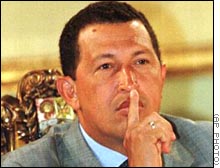
Hugo Chávez knows how to wind up the US government. His latest wheeze - selling discounted home heating oil to chilly residents of Massachusetts - follows his offer to help victims of Bush administration bungling over Hurricane Katrina. But the Venezuelan president's tweaking of Washington noses extends beyond weather-related crises.

Mr Chávez, chief rainmaker of Venezuela's so-called Bolivarian revolution, was busy yesterday persuading Colombia to build a pipeline to its Pacific coast. That could increase Caracas's oil exports to China at the expense of the US, which depends on Venezuela for roughly 15% of its foreign oil. Earlier this week Mr Chávez celebrated a tractor deal with Iran. He said mischievously that he looked forward to further bilateral "technology transfers".

Mr Chávez is also using Venezuela's oil bonanza, fuelled by high world prices, to promote his populist agenda in Washington's Latin American backyard. Preferential oil deals have been offered to up to 20 countries. And at last month's Summit of the Americas in Argentina Mr Chávez successfully led opposition to a US-backed regional free trade pact. When Mexico's president, Vicente Fox, objected, he branded him a "lapdog of American imperialism".

US discomfiture does not stop there. It claims Venezuela's arms purchases from Russia and elsewhere are "exporting instability". Particular concern centres on Mr Chávez's support for leftwing forces in Colombia, Nicaragua, El Salvador and Bolivia, where Evo Morales, a Chávez disciple, is tipped to win next month's presidential election.

"Morales is my friend, another great guy and an Indian leader," Mr Chávez told the Washington Post in September. "D'you want me to support the extreme right? I am a revolutionary. I have to support the leftwing movements in Latin America. We have to change Latin America."

George Bush, nicknamed "Mr Danger" by Mr Chávez, put it another way after the failed summit: Latin America must choose between a "vision of hope" (represented by the US) and those who sought "to roll back the democratic progress of the past two decades".

Hyperbole aside, Mr Bush may have a point. The garrulous, hyperactive Mr Chávez is wildly popular with the poor of Venezuela's urban slums. His anti-American rhetoric has facile appeal in a region ravaged by the discredited "Washington consensus" on neo-liberal reform. But critics say he is an opportunistic showman lacking firm ideological conviction and bent on undemocratic self-aggrandisement.

Love him or hate him, Mr Chávez is impossible to ignore. Thirty years ago the US might have silenced him one way or another, but that time in Latin America has passed. Despite loose talk of coups and assassination, there seems to be no stopping El Presidente - and no end to the baiting of Mr Bush.

My source : Guardian

That animal! Selling heating oil to the poor inner city people at a hugely discounted rate, in the winter no less.

We need someone to defend these poor people from the impending affordable heating fuel prices.

Alas, I'm sure dubya and his cronies will step in and make sure no welfare recipients receive any discounted necessities.

It's considerate of bush&co. though, they wouldn't want the poor to feel like they're getting a handout or a break, that would be degrading!

By Anonymous somethingsphishy, at November 27, 2005 5:24 pm  

By the way,

Hey H, I've pretty much been here all along always reading your blog. I just have to disconnect my self sometimes as my frustrations tend to consume me, which left unchecked I believe will lead to physical ailments of some sort or other.

Either way, keep up the great work!

-phishy

By Anonymous somethingsphishy, at November 27, 2005 5:31 pm  

Hey , good to see you phishy :-)

I am sure its no suprise that i agree with your assesment

what i find amusing is the cheeky way he does it , the comment "i look forward to further bilateral technology transfers".

is purely designed to wind up Bush , and it works

I understand what you say about frustration , i sometimes feel the same , so once or twice a week i put the site to one side and try to switch off from it

saying that , each day seems to be bringing us closer to the end of these war criminals , each day more and more Americans are noticing the truth that you and I have been trying to tell them

in 2003 nearly 80 % thought that saddam had something to do with 9/11

now barely 30 % feel that Bush is telling the truth

It is frustrating , but we have come along way buddy

By Blogger _H_, at November 27, 2005 6:02 pm  

Dutch foreign minister warns US on human rights abuses

THE HAGUE (AFX) - Dutch Foreign Minister Ben Bot today warned the US government that if it continued to 'hide' over reports of secret prisons in eastern Europe, Dutch contributions to US-led military missions could be affected, the ANP news agency reported.


'The US should stop hiding. It will all come out sooner or later," Bot told the Dutch parliament, according to ANP.

Bot added that the Americans 'are on the borderline' in their fight against terrorism. The minister would not say at what point the Netherlands might end their cooperation with the US.

'That remains a careful consideration of the importance of fighting terrorism weighed against the respect for human rights,' he said. He stressed that the Netherlands were still working with the US in several operations, in Afghanistan for example.

'We stress the fair treatment of prisoners and adherence to the Geneva Conventions,' the minister added.

The Dutch government is set to decide next week on a possible new mission to the Afghan province of Uruzgan involving 1,100 soldiers.

The Netherlands has contributed more than 1,000 troops to Afghanistan as part of the NATO-led International Security and Assistance Force (ISAF) deployed following the US-led war to oust the Taliban regime in late 2001.

My Source Forbes

Are ' US Marines locked in battle with Syrian troops '

Well Debka seem to thinks so , they say.....


US Marines are locked in battle with Syrian troops after crossing the border from Iraq into Syria at a point west of al Qaim

November 25, 2005, 12:27 AM (GMT+02:00)

Both sides have suffered casualties. US soldiers crossed over after Damascus was given an ultimatum Thursday, Nov. 24, to hand over a group of senior commanders belonging to Abu Musab al Zarqawi’s al Qaeda force. According to US intelligence, the group had fled to Syria to escape an American attack in Mosul. Syrian border guards opened fire on the American force
.

Are they ahead of the game or following a false lead , time will tell

Another act of war by the U.S, but are we surprised?

By Blogger DJEB, at November 25, 2005 7:22 am  

I think we have moved so far beyond suprised that it is the only shock would be to find out that some statement from the whitehouse etc was actually honest and true , the expected denial of this border incident will of course be of no value in the search for the truth .

Thanks for popping by again djeb , still no news from voice ?

By Blogger _H_, at November 25, 2005 4:32 pm  

Iraq: Animation ' Stay the course man '

Another classic Animation of the week by Mark Fiore


you can watch it Here

Hey _H_. You've taken to Mark Fiore too I see.

By Blogger DJEB, at November 25, 2005 7:20 am  

He is fantastic , I went through his entire collection after spotting him on your site

I clicked the "email me when a new cartoon..." and forgot all about him

It's like getting an Early Christmas present to get an email from Mark

a very talented man

:-)

By Blogger _H_, at November 25, 2005 4:27 pm  

Formerly classified Pentagon Document Described White Phosphorus As Chemical Weapon

Source : Think progress please visit them to commend them on their exclusive research

To downplay the political impact of revelations that U.S. forces used deadly white phosphorus rounds against Iraqi insurgents in Falluja last year, Pentagon officials have insisted that phosphorus munitions are legal since they aren’t technically “chemical weapons.”


The media have helped them. For instance, the New York Times ran a piece today on the phosphorus controversy. On at least three occasions, the Times emphasizes that the phosphorus rounds are “incendiary muntions” that have been “incorrectly called chemical weapons.”

But the distinction is a minor one, and arguably political in nature. A formerly classified 1995 Pentagon intelligence document titled “Possible Use of Phosphorous Chemical” describes the use of white phosphorus by Saddam Hussein on Kurdish fighters:

IRAQ HAS POSSIBLY EMPLOYED PHOSPHOROUS CHEMICAL WEAPONS AGAINST THE KURDISH POPULATION IN AREAS ALONG THE IRAQI-TURKISH-IRANIAN BORDERS. […]

IN LATE FEBRUARY 1991, FOLLOWING THE COALITION FORCES’ OVERWHELMING VICTORY OVER IRAQ, KURDISH REBELS STEPPED UP THEIR STRUGGLE AGAINST IRAQI FORCES IN NORTHERN IRAQ. DURING THE BRUTAL CRACKDOWN THAT FOLLOWED THE KURDISH UPRISING, IRAQI FORCES LOYAL TO PRESIDENT SADDAM ((HUSSEIN)) MAY HAVE POSSIBLY USED WHITE PHOSPHOROUS (WP) CHEMICAL WEAPONS AGAINST KURDISH REBELS AND THE POPULACE IN ERBIL (GEOCOORD:3412N/04401E) (VICINITY OF IRANIAN BORDER) AND DOHUK (GEOCOORD:3652N/04301E) (VICINITY OF IRAQI BORDER) PROVINCES, IRAQ.

In other words, the Pentagon does refer to white phosphorus rounds as chemical weapons — at least if they’re used by our enemies.

The real point here goes beyond the Pentagon’s legalistic parsings. The use of white phosphorus against enemy fighters is a “terribly ill-conceived method,” demonstrating an Army interested “only in the immediate tactical gain and its felicitous shake and bake fun.” And the dishonest efforts by Bush administration officials to deny and downplay that use only further undermines U.S. credibility abroad.

To paraphrase President Bush, this isn’t a question about what is legal, it’s about what is right.

read the declassified document Here

Nice peace of detective work Sherlock.

However, and I quote however as somebody with a Military background (25 years) I can assure you that the shells used by the Yanks, were smoke. The fact it contains WP on 116 felt pads seems to have missed you by.
The shells used by Saddam were pure Phosphorus, these are not designed as smoke shells but as incendiary weapons with an aim to kill. Big difference and if you should get off your Ivory tower and do a little searching you will find I talk facts and not craps.

By Anonymous Anonymous, at November 26, 2005 7:04 am  

well from my ivory tower it is hard to see those who wish to hide as anonymous , people who talk "facts and not craps" dont tend to hide in such ways

the pentagon has already stated that WP was used as an incendory weapon in falluja agaisnt insurgents

the way they are 'designed' is not the point , it is the way they were 'used' that is the issue

and it seems there is no difference between my assesment and what is being said by the pentagon

the correct way to dispute this claim , (as it seems is your intention) is to inform me that this is just a report of a conversation between two kurds , that the pentagon themselves do not use the word 'chemical' they just report that the word was used in an intercepted conversation

I would dispute this , but there is a point to such an argument

As for your 'claimed' 25 years military background , well again Mr/Ms Anonymous , i dont doubt you , you could be a commander , you could be the cook , how would i know

But you have made no attempt to discover whom i might be .

Do I have any millitary knowledge ?
Have i been to Iraq ?

you have no idea , and to be frank , the way you are so willing to "assume" that your knowledge is better then those you speak to does make me think your saying so more for impact then factual accuracy

they say to ASSUME is to make an ASS out of U and ME

By Blogger _H_, at November 26, 2005 4:07 pm  

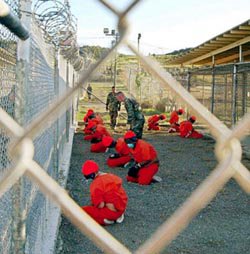
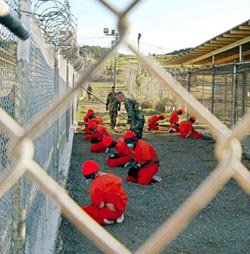
UN convinced US hiding truth about Guantanamo

BERLIN: The United Nations envoy who investigates torture allegations said the United States has "something to hide" at the Guantanamo Bay detention camp, the German weekly Die Zeit reported in its latest edition.


Special Rapporteur Manfred Nowak is investigating "serious allegations" against the United States in relation to the controversial military prison at Guantanamo in Cuba, the weekly said in its edition dated Thursday.

The UN this month turned down an invitation to inspect Guantanamo, saying there was no point because the US authorities would not allow UN officials free access to detainees there. Die Zeit said Nowak was "convinced" that the US authorities were hiding something about the facility.

The US government has been sharply criticised for conditions at Guantanamo, where around 500 detainees are being held. Most of them were captured after a US-led offensive toppled the Taliban regime in Afghanistan in late 2001.

The weekly quoted a report from the US State Department that defends living conditions at the detention camp, saying detainees live in "air-conditioned cells", have "family-style dinners" and are able to take fresh air and even play board games and football.

But Die Zeit said former prisoners of Guantanamo paint a starkly different picture of the camp, claiming they have been tortured. The weekly said it has obtained a copy of a letter from a detainee dated November 2 claiming that prisoners on hunger strike were tied to their beds and force-fed by a tube through their noses. "No independent inspector sees what happens here," the detainee wrote.


Source : Here

CIA 'may have flown prisoners across Austria'

VIENNA - The U.S. Central Intelligence Agency (CIA) may have flown detained terrorist suspects across neutral Austrian airspace in 2003, said a newspaper report on Wednesday.


The newspaper Kurier said that the U.S. transport plane in question had crossed Austria without permission. When the affair became known this week, the opposition Social Democrats and Greens demanded clarification, and that an official protest be sent to Washington.

The report came at the same time as current inquiries in several European Union states about stopovers by CIA aircraft allegedly with prisoners on board.

The Austrian overflight in January 2003 was confirmed by Air Force commander Major General Erich Wolf in a radio interview Wednesday morning.

He said there had been an alert, and Austrian military jets had taken off to intercept the suspect aircraft. But the authorities had decided there were no grounds for suspicion that Austrian airspace was being misused.

Wolf said that the type of plane was also used for civilian flights. Under Austrian neutrality, only unauthorized foreign military overflights are banned.

Wolf was reacting to a report in the German paper Berliner Zeitung that on January 21, 2003, a Hercules AC-130 aircraft of the CIA airline "Tepper Aviation" had taken off from the U.S. military base at Frankfurt and headed for Azerbaijan.

The aircraft had crossed Austrian airspace - reportedly on a civilian flight to Baku - and been escorted to the border by two Austrian "Draken" military jets. The Austrian pilots had taken photographs, and there had been an official protest to Washington, the newspaper report said.

However, Foreign Ministry spokeswoman Astrid Harz said she could not confirm that a protest had been made.

Source : Here

Uzbekistan refuses airspace to NATO

BRUSSELS: Uzbekistan has told the North Atlantic Treaty Organisation (NATO) that it can no longer use its territory or airspace for the peacekeeping mission in neighbouring Afghanistan, NATO officials said on Wednesday.


The decision is likely to affect Germany in particular, because it uses a base in southern Uzbekistan to provide backup for its troops across the border.

However, NATO said that alternatives would be found if needed and the mission would not be hurt. “There will be no diminishment of our ability to support our operation in Afghanistan,” NATO spokesman James Appathurai said.

NATO diplomats said that Uzbek authorities informed the allies that they must withdraw troops and stop flights by January 1. The order comes amid worsening relations between the Central Asian republic and western nations that have been critical of a May crackdown on demonstrators in Uzbekistan.

The European Union last week banned 12 Uzbek officials from entering the bloc because of their involvement in quelling the uprising, in which hundreds were killed. Last month, the 25-nation bloc imposed an arms embargo on the ex-Soviet republic and suspended a cooperation pact.

Uzbekistan’s move away from once-warm relations with the west has been matched by closer ties with Russia. The two countries this month signed a far-reaching treaty opening the way for a Russian military deployment in the Central Asian nation.

Germany, which has 2,250 troops in Afghanistan, uses a base at Termez in Uzbekistan for backup and to run supplies to troops, who make up one of the largest contingents in the NATO force.

A spokesman for the Defence Ministry in Berlin said that Germany had other choices. “If we cannot, we have several alternatives” in Afghanistan and elsewhere, the spokesman said. He declined to elaborate.

Officials said that one alternative could be switching the support base to Mazar-i-Sharif in northern Afghanistan. Germany is supposed to take over the NATO headquarters there from Britain next year under plans to expand and reorganise the peacekeeping force.

Uzbekistan has already ordered out the US military. On Monday, the Americans flew their last plane out from an air base in Uzbekistan that had been an important hub for operations in Afghanistan.

Uzbekistan’s hard-line President Islam Karimov ordered the US troops to leave the Karshi-Khanabad Air Base within six months after Washington condemned the May crackdown

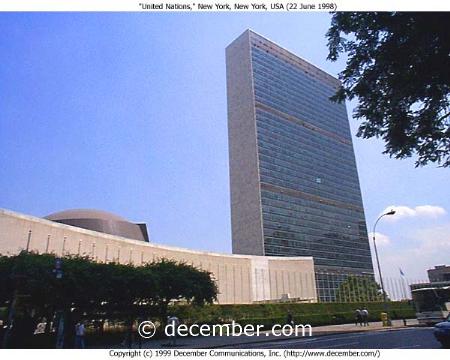
US steps up war to monopolize UN

John Bolton, the abrasive U.S. ambassador to the United Nations who has been dubbed by one New York newspaper as "a human wrecking ball", is living up to every critic's gloomy expectations.


Last week, he threatened U.N. member states, specifically the 132 developing nations, that if they don't play ball with the United States, Washington may look elsewhere to settle international problems.

"It is obvious," Jim Paul of the New York-based Global Policy Forum told IPS, "that Washington has once again threatened the United Nations with its usual warning: 'Do what we say, or we will send you into oblivion"'. He said Bolton's message is clear, "If you don't, we will wreck you."

Addressing a gathering at Wingate University in North Carolina last week, Bolton said: "Being practical, Americans say that either we need to fix the institution (the United Nations), or we'll turn to some other mechanism to solve international problems."

Asked for his comments, U.N. Secretary-General Kofi Annan refused to be drawn into the debate. "I am not the interpreter of Ambassador Bolton," he bluntly told reporters early this week.

Told that it was a "serious statement" requiring a serious response from Annan, U.N. spokesman Stephane Dujarric would only say: "Again, I think the secretary-general's words were that he wasn't going to interpret what Mr. Bolton said, and if he's not, I don't think I would risk it too."

"But we are working with the United States, its Permanent Mission and with Ambassador Bolton very closely, as we are with all the other member states, on the issues of reform that are being discussed right now," Dujarric added.

But Phyllis Bennis, a senior fellow at the Washington-based Institute for Policy Studies, had a more critical take on Bolton's controversial statement.

"Bolton himself, who said in a debate with me in 1994 that 'there is no United Nations', has now surpassed his own quote, claiming he is enjoying his job as ambassador to the United Nations because it is 'a target-rich environment'," Bennis told IPS.

She said that since the "failed U.N. summit" last September, the administration of U.S. President George W. Bush has used the demand for "management reform" as a means of achieving its political ends.

These include disempowering the General Assembly and assuring that future holders of the secretary-general's position will be unequivocally accountable to Washington's unilateralist agenda: an instrumentalist view in which the United Nations provides multilateral cover for unilateral and illegal U.S. interventions and wars, said Bennis, author of several publications on the United Nations and international politics.

She also pointed out that U.S. domination of the world body is hardly a new story. It was back in 1995, during the self-declared "assertive multilateralism" of the presidency of Bill Clinton that then-U.N. ambassador Madeleine Albright famously said "the U.N. is a tool of American foreign policy."

"But the Bush team, led by John Bolton, has taken that long-standing domination to an entirely new level," said Bennis, author of "Challenging Empire: How People, Governments and the United Nations Defy U.S. Power".

The 132 developing countries of the Group of 77 (G77) say that U.N. reforms are primarily driven by the Bush administration and backed by right wing neo-conservatives who have made U.N.-bashing into a fine art.

The G77 has told Annan that it is strongly opposed to the neo-conservative view that the world body should be run like a U.S. corporation, with the secretary-general playing the role of a chief executive officer (CEO).

Paul of the Global Policy Forum says the Bush administration wants Annan just to be that: a glorified CEO. "This is not compatible with democratic institutions like the United Nations. U.S. corporations are authoritarian, with no decision-making powers with employees," Paul added.

He also pointed out that the Bush administration sees Annan as being "a vector of influence, and pliant to U.S. interests than the U.N. General Assembly will ever be".

Since Washington cannot control the General Assembly, it wants the top leadership in the U.N. Secretariat to be in its pockets, he added.

Concurring with Paul, Bennis said that many of the secretary-general's top staff have been replaced over the last two years or so with active supporters of the U.S. agenda for the United Nations.

"That effort includes the U.S.-orchestrated replacement of Kofi Annan's longstanding chief of staff Iqbal Riza with Mark Malloch-Brown (who called Bolton 'very effective'), and the appointment of Bush loyalist and right-wing American State Department official Christopher Burnham as undersecretary-general for management," she said.

But Bennis argued that Annan himself has maintained some level of independence and has not completely collapsed under the coercion (he has not retracted his characterisation of the Iraq war as "illegal," for example) -- but the pressure is rising.

Bennis said that some of Annan's senior advisers have played "a major role in reassuring Washington power-brokers, including Bolton's anti-U.N. backers, that the United Nations remains a pliant and malleable tool for U.S. policy efforts".

Paul said that developing nations should collectively remain united. "If they cave in to U.S. threats now, they will only help open up new threats."

"The United Nations, which consists of 191 member states, cannot be run according to the dictates of a single country," he added.

Source : Here

Thursday, November 24, 2005

British MP is willing to go to jail to reveal Al-jazeera memo

I'll go to jail to print the truth about Bush and al-Jazeera

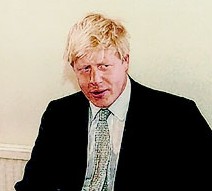
By Boris Johnson
Telegraph


It must be said that subsequent events have not made life easy for those of us who were so optimistic as to support the war in Iraq. There were those who believed the Government's rubbish about Saddam's Weapons of Mass Destruction. Then the WMD made their historic no-show.

Some of us were so innocent as to suppose that the Pentagon had a well-thought-out plan for the removal of the dictator and the introduction of peace. Then we had the insurgency, in which tens of thousands have died.

Some of us thought it was about ensuring that chemical weapons could never again be used on Iraqi soil. Then we heard about the white phosphorus deployed by the Pentagon. Some people believed that the American liberation would mean the end of torture in Iraqi jails. Then we had Abu Ghraib.

Some of us thought it was all about the dissemination of the institutions of a civil society - above all a free press, in which journalists could work without fear of being murdered. Then we heard about the Bush plan to blow up al-Jazeera.

Some of us feel that we have an abusive relationship with this war. Every time we get our hopes up, we get punched by some piece of bad news. We yearn to be told that we're wrong, that things are going to get better, that the glass is half full. That's why I would love to think that Dubya was just having one of his little frat-house wisecracks, when he talked of destroying the Qatar-based satellite TV station. Maybe he was only horsing around. Maybe it was a flippant one-liner, of the kind that he delivers before making one of his dramatic exits into the broom-closet. Perhaps it was a kind of Henry II moment: you know, who will rid me of this turbulent TV station? Maybe he had a burst of spacy Reagan-esque surrealism, like the time the old boy forgot that the mikes were switched on, and startled a press conference with the announcement that he was going to start bombing Russia in five minutes. Maybe Bush thought he was Kenny Everett. Perhaps he was playing Basil Brush. Boom boom.

Who knows? But if his remarks were just an innocent piece of cretinism, then why in the name of holy thunder has the British state decreed that anyone printing those remarks will be sent to prison?

We all hope and pray that the American President was engaging in nothing more than neo-con Tourette-style babble about blowing things up. We are quite prepared to believe that the Daily Mirror is wrong. We are ready to accept that the two British civil servants who have leaked the account are either malicious or mistaken. But if there is one thing that would seem to confirm the essential accuracy of the story, it is that the Attorney General has announced that he will prosecute anyone printing the exact facts.

What are we supposed to think? The meeting between Bush and Blair took place on April 16, 2004, at the height of the US assault on Fallujah, and there is circumstantial evidence for believing that Bush may indeed have said what he is alleged to have said.

We know that the administration was infuriated with the al-Jazeera coverage of the battle, and the way the station focused on the deaths of hundreds of people, including civilians, rather than the necessity of ridding the town of dangerous terrorists. We remember how Cheney and Rumsfeld both launched vehement attacks on the station, and accused it of aiding the rebels. We are told by the New York Times that there were shouty-crackers arguments within the administration, with some officials yelling that the channel should be shut down, and others saying that it would be better to work with the journalists in the hope of producing better coverage.

We also recall that the Americans have form when it comes to the mass media outlets of regimes they dislike. They blew up the Kabul bureau of al-Jazeera in 2002, and they pulverised the Baghdad bureau in April 2003, killing one of the reporters. In 1999 they managed to blow up the Serb TV station, killing two make-up girls, in circumstances that were never satisfactorily explained.

To be fair to the Americans, we must also accept that they had good grounds for resenting al-Jazeera. The station is hugely respected in the Arab world, has about 35 million viewers, and yet it gives what can only be described as a thoroughly Arab perspective of current affairs. It assists in the glorification of suicide bombers; it publishes the rambling tapes of Bin Laden and others among the world's leading creeps and whackos; it is overwhelmingly hostile to America and sceptical about the neo-con project of imposing western values and political systems in the Middle East.

And yet however wrong you may think al-Jazeera is in its slant and its views, you must accept that what it is providing is recognisably journalism. It is not always helpful to the American cause in Iraq, but then nor is the BBC; and would anybody in London or Washington suggest sending a Tomahawk into White City? Well, they might, but only as a joke. Exhausted Western leaders, living in the nightmare of a media-dominated democracy, are allowed to make jokes about blowing up journalists. I seem to remember that when I was sent to Belgrade to cover the Nato attacks, Tony Blair told the then proprietor of The Daily Telegraph that he would "tell Nato to step up the bombing!" Ho ho ho.

But if there is an ounce of truth in the notion that George Bush seriously proposed the destruction of al-Jazeera, and was only dissuaded by the Prime Minister, then we need to know, and we need to know urgently. We need to know what we have been fighting for, and there is only one way to find out.

The Attorney General's ban is ridiculous, untenable, and redolent of guilt. I do not like people to break the Official Secrets Act, and, as it happens, I would not object to the continued prosecution of those who are alleged to have broken it. But we now have allegations of such severity, against the US President and his motives, that we need to clear them up.

If someone passes me the document within the next few days I will be very happy to publish it in The Spectator, and risk a jail sentence. The public need to judge for themselves. Sunlight is the best disinfectant. If we suppress the truth, we forget what we are fighting for, and in an important respect we become as sick and as bad as our enemies.

Boris Johnson is MP for Henley and editor of 'The Spectator'

Iran and Iraq 'The friendship blooms'

Iran's Supreme Leader, Ayatollah Ali Khamenei, has urged the visiting Iraqi president to push for a speedy pullout of foreign troops from his country. The ayatollah also told Jalal Talabani that the US was mainly responsible for widespread violence in Iraq.


Mr Talabani is on the second day of a landmark visit to Iran, the first by an Iraqi leader for almost 40 years.

On Monday he met Iranian President Mahmoud Ahmadinejad, who pledged total support for Iraq's independence. In remarks reported by Iranian state media, Ayatollah Khamenei blamed the US for much of the violence destabilising Iraq.

"The Islamic Republic of Iran holds the American government responsible for the suffering of the Iraqi people and all the crimes and assassinations now being committed in Iraq," he said.

"The presence of foreign troops is damaging for the Iraqis, and the Iraqi government could ask for their departure by proposing a timetable," he added.

"The US and Britain will eventually have to leave Iraq with a bitter experience."

Shia Iran has forged ever-closer links with Iraq, which has been dominated by a coalition of Shias and Kurds since the fall of Saddam Hussein in 2003. But there have been reports that Tehran offers support to Shia militias who have staged attacks against US and UK forces in Iraq.

Mr Talabani, a Kurd, has been wary of accusing his neighbour of interfering in Iraq's affairs.

"We will never forget the Iranian government and people's help to Iraq, and we hope our relations improve in all areas," he was reported as saying.

The BBC's Frances Harrison in Tehran says that behind the scenes Iraqi officials are likely to push for greater sharing of intelligence with Iran, and for more efforts to secure the border between the two countries.

In public, Ayatollah Khamenei said Iraq's security was Iran's security and praised Iraq's elected government.


This article comes from the BBC

Italics are my comments and should not be atributed to the owner of this article

Well this won't go down well with the Iran war hawks , Iraq is pushing for a greater sharing of intelligence , security and a push to make the two countries closer then they have been for 40 years . One thing we can be sure of , the US will not get any support from Iraq in its current policy on Iran

' The greatest strategic blunder in the history of the United States.'

By Patrick Buchanan

Gen. William Odom has called the Iraq War the greatest strategic blunder in the history of the United States. Final returns are not yet in, but he may not be far off.


In invading Iraq, we attacked and occupied a country of 25 million that had not attacked us, did not threaten us, did not want war with us – to strip it of weapons we now know it did not have.

Even if, as most believed, Saddam had chemical or biological weapons, there was no evidence he intended the suicidal use of such weapons on U.S. troops in Kuwait, or to hand them over to al-Qaida to use on America, risking massive retaliation. Saddam was never a suicide bomber. He was always a survivor.

After 9-11, we couldn't take the chance, countered the War Party. Nonsense. We take the chance every day with Iran and North Korea, far more powerful nations, as we did every day of the Cold War against a nuclear-armed Russia and China. They had missiles and WMD. But, like Saddam, they were deterred.

Yet President Bush, prodded by a cabal of neoconservatives who, for their own motives, had been plotting war on Iraq for years, invaded. History will hold him accountable for the consequences.

On the credit side, he liberated the Iraqis from a murderous tyrant. But the cost is high and rising: 17,000 U.S. dead and wounded – i.e., the eradication of an entire American division – $200 billion, the diversion of priceless assets from the fight against al-Qaida, rampant anti-Americanism in the Islamic world, the shattering of our alliances, the division of our nation, and the prospect of a U.S. defeat by Iraqi insurgents and terrorists.

Another cost must be added after a week in which Harry Reid and Co. accused President Bush of lying us into war, Republicans accused Democrats of cutting and running, and Rep. John Murtha accused Bush and Cheney of being chicken-hawks who dodged the draft in Vietnam.

Our leaders are behaving like the leaders of the late and unlamented French Third Republic.

But if Bush, Cheney and Rumsfeld are responsible for the war and its consequences, so, too, are the potential Democratic nominees: Kerry, Edwards, Clinton, Biden and Bayh. In October 2002, because the country was cheering a commander in chief beating a war drum, they voted Bush a blank check to take us to war. In the fall of 2005, with the people souring on the war, they voted for a timetable to get out.

We were deceived, we were misled, we were lied to, they wail. One only awaits their explanation that they were brainwashed by a C student. The Democratic Party is a poodle of public opinion, unfit to lead the nation.

But if we were stampeded into this war, we must not let ourselves be stampeded out of Iraq by a Democratic Party in panic, scrambling to get out in front of its base. For the cost of retreat and defeat may be far more calamitous than the costs of the present war.


There are at present four exit strategies:

A. The John McCain strategy of sending 10,000 more U.S. troops, taking as long as needed to train the Iraqi army and staying as long as necessary to achieve victory.

B. The Bush strategy of "Stay the Course," with the present complement of forces staying as long as it takes to win.

C. The exit strategy envisioned in the bipartisan resolution in the Senate last week that passed with 79 votes, calling for Bush to give the Congress benchmarks of success, leading to withdrawal.

D. The Democratic option, supported by all but five Democratic senators, to set benchmarks and a timetable for getting out.


The McCain option is a non-starter, for it is non-credible. Adding 10,000 troops to the 160,000 there will not pacify a Sunni Triangle of 5 million. U.S. opposition to the war is near 60 percent. And if Bush refused to send the troops McCain has wanted for two years, he will not do so now that his support is evaporating. The failure to listen to Gen. Shinseki in 2002 was an irremediable blunder.

As for the Bush policy of "Stay the Course," with support for the war crumbling in Congress and the country and no light at the end of the tunnel, it is unsustainable. On the other hand, a House resolution, engineered by Republicans, calling for immediate withdrawal was backed by only three members. Cut and run is not an option.

However, there exists a bipartisan consensus for Iraqification – the transfer of political authority in Baghdad and responsibility for the war to the Iraqis. All that remains in dispute is the timetable.

As for the ugliness and acrimony of Washington, it reflects the rage, resentment and shame of men who know they made a horrible mistake, thousands have suffered and died for it, and worse may be yet to come. The truth is both parties failed America. What the Greatest Generation won, the baby boomers are frittering away.


My source for this article ICH

Iraqi tribal Sunni leader slain in home by men wearing Iraqi army uniforms

(AP) BAGHDAD, Iraq — Gunmen wearing Iraqi army uniforms broke into the home of a senior Sunni leader on Wednesday and killed him, his three sons and his son-in-law on the outskirts of Baghdad, his brother and an interior ministry official said.


Khadim Sarhid al-Hemaiyem was the leader of the Sunni Batta tribe and the brother of a parliamentary candidate in the Dec. 15 election, the official, Maj. Falah al-Mohammedawi, said. Another of the slain man's brothers said the family has been attacked before.

"A group of gunmen with Iraqi army uniforms and vehicles broke into my brother's house in the Hurriyah area and sprayed them with machine gun fire, killing him along

with three sons and his son-in law,"
said his brother, Nima Sarhid Al-Hemaiyem. "His eldest son was assassinated one month ago in the Taji area, northern Baghdad, when unidentified men shot and killed him." Al-Mohammedawi said government forces were not involved and the investigation was focused on insurgents.

"Surely, they are outlaw insurgents. As for the military uniform, they can be bought from many shops in Baghdad," he said. "Also, we have several police and army vehicles stolen and they can be used in the raids."

The Batta tribe is one of Iraq's largest Sunni tribes from the area north of Baghdad, where they are influential. Dozens of people went to al-Hemaiyem's home, where the bodies were laid out, wrapped in blankets before the funeral.

The slaying follows a big push by U.S. officials to encourage Sunni Muslim participation in the upcoming election, which will install the first non-transitional government in Iraq since the 2003 invasion. Some Sunni-led insurgent groups have declared a boycott of the election and have threatened politicians who choose to participate in it.

More than 160 Iraqis, most of them Shiites, have died in a wave of spectacular suicide operations across Iraq since Friday.

Up close: the reality of Iraq's hidden war

by Sean Smith in Qaim

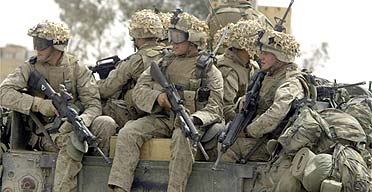
Guardian I was attached to squads from the 3rd Battalion/Sixth Marines and 2nd Battalion/First Marines as they moved into Iraqi towns along the border with Syria.

The US said the aim of Operation Steel Curtain, which began two weeks ago and has now been completed, was to break up insurgent cells and disrupt their supply lines from Syria. The marines worked their way house by house through the border towns along the Euphrates. They had not been in the towns for at least a year and thought they would encounter a lot of insurgents on the first day. But they took only a little fire in Karabila and Husayba, from IEDs (improvised explosive devices) set off in the streets and hidden in walls.

There was more resistance at Ubaydi in the following days. The US went in with tanks, Humvees, helicopters and planes. They swept from one end to the other, searching for weapons. They kicked in doors or used explosives to get in, or used tanks to do it. Humvees went in behind the troops with loudspeakers calling on people to leave.

They encountered Iraqis with guns and rocket-propelled grenades. Two marines were killed, one of them going into a building. I heard it but did not realise what had happened until 20 minutes later. There was a group barricaded in a house and they waited for the soldier to come in and shot him. I saw the body of one of the men who killed him lying in the street.

Five other marines were killed when they went to a farmhouse outside Ubaydi. They were chasing two men, went into the house, and it blew up.

When people saw a ferocious assault was under way, they began to leave town. Women and children came out carrying white flags. It was eerie seeing columns of people appearing through the smoke and explosions, with no one knowing which direction the shooting was coming from. I am sure we will hear of more casualties.

All men of military age were detained. they had material sprayed on their hands to reveal whether they had handled explosives or gunpowder. Families were split up and loudspeakers were barking commands. Some of the detainees came back and some did not.

At Rawa the Iraqi army carried out searches, with US advisers. They did not arrest all males of military age, only those on a two-page list of suspects . They found about 3,000lb of explosives. They took the detainees - about 20 - to a hill overlooking Rawa. There were a lot of mines so it took ages to get there. They were handcuffed all night, with their eyes bandaged. There was no room for everyone in the shelter so some slept outside.

They were given a bottle of water and a blanket, then herded in the morning on to a helicopter and taken to the base at Qaim for questioning.

UK orders newspapers to cease publishing on Aljazeera memo

Britain's Daily Mirror newspaper has been ordered to cease publishing further details from an allegedly top secret memo revealing that US President George Bush wanted to bomb Aljazeera.


The gag order from Attorney-General Lord Goldsmith came nearly 24 hours after the paper published details of what it said was a transcript of talks between Bush and the British Prime Minister Tony Blair.

In those talks, which took place during the prime minister's April 2004 visit to Washington, Blair is said to have talked Bush out of launching "military action" on the television channel's headquarters in Doha, Qatar.

"No 10 did nothing to stop us publishing our front page exclusive yesterday (Tuesday)," the Daily Mirror said on Wednesday, referring to the British prime minister's office.

But the attorney-general warned that publication of any further details from the document would be a breach of the Official Secrets Act. He threatened an immediate High Court injunction unless the newspaper confirmed it would not publish further details.

"We have essentially agreed to comply," the paper reported. "We made No 10 fully aware of the intention to publish and were given 'no comment' officially or unofficially", Daily Mirror Editor Richard Wallace was quoted as saying. "Suddenly 24 hours later we are threatened under Section 5 [of the Official Secrets Act]."

According to Britain's Guardian newspaper, it is the first time that the Blair government has threatened to prosecute a newspaper for publishing the contents of leaked government documents.

The White House has dismissed the Daily Mirror report, calling it "outlandish".

"We are not going to dignify something so outlandish and inconceivable with a response," White House spokesman Scott McClellan said on Tuesday.

Aljazeera itself, whose coverage of the war in Iraq has been criticised by the US, says it is also investigating the report."If the report is correct then this would be both shocking and worrisome not only to Aljazeera but to media organisations across the world," the station said in a statement.

Following the Mirror's report there have been calls to release the transcript.

"If the report is correct then this would be both shocking and worrisome not only to Aljazeera but to media organisations across the world"

"If true, then this underlines the desperation of the Bush administration," said Liberal Democrat foreign affairs spokesman Sir Menzies Campbell. "On this occasion, the prime minister may have been successful in averting political disaster, but it shows how dangerous his relationship with President Bush has been."

The Mirror on Tuesday quoted a source as saying: "The memo is explosive and hugely damaging to Bush"

"He made clear he wanted to bomb Aljazeera in Qatar and elsewhere. Blair replied that would cause a big problem. There's no doubt what Bush wanted to do - and no doubt Blair didn't want him to do it."

The threat by Bush also "casts fresh doubt on claims that other attacks on Aljazeera were accidents", the Mirror said in its report on Tuesday.

In November 2001, Aljazeera's office in Kabul was destroyed by a US missile. None of the crew was at the office at the time. US officials said they believed the target was a "terrorist" site and did not know it was Aljazeera's office.

In April 2003, an Aljazeera journalist, Tariq Ayub, died when its Baghdad office was struck during a US bombing campaign.

In its statement on Tuesday, Aljazeera said that if the Mirror's report was true, it would "cast serious doubts in regard to the US administration's version of previous incidents involving Aljazeera's journalists and offices."

A British civil servant has been charged under the Official Secrets Act for allegedly leaking the government memo.

Wednesday, November 23, 2005

EU to 'formally' investigate US secret prisons

The European Union is to formally ask the US to clarify reports that it ran secret CIA prisons in eastern Europe. The US has refused to confirm or deny the reports, which surfaced in the US earlier this month.


A European investigator is seeking satellite images of Romania and Poland, alleged sites of the secret prisons. Spain, Sweden and Iceland are looking into separate reports that CIA planes stopped in their territory while transporting terror suspects.

The European investigator, Swiss Senator Dick Marty, is looking into what he called the suspicious movement patterns of flights in the region.

"This is absolutely not a crusade against America," he said. "I think all Europeans agree with Americans that we must fight terrorism.... but this fight has to be fought by legal means," the Associated Press quoted him as saying. "Wrongdoing only gives ammunition to both the terrorists and their sympathisers."

The UK Foreign Office has confirmed that Britain will writing to the US, on behalf the EU, to clarify the reports of secret prisons, which were reportedly set up after the 11 September 2001 attacks.

The Washington Post newspaper first reported on 2 November that the CIA had been using Soviet-era camps in eastern Europe to detain and interrogate terror suspects. It did not name the countries, but a day later Human Rights Watch said it had evidence indicating the CIA transported terror suspects captured in Afghanistan to Poland and Romania.

Last week, the Swedish government began an investigation to establish whether CIA prisoner flights had used Swedish airports.

Spain is investigating similar claims about secret flights from Majorca while Iceland says it has asked the US for an explanation and is still awaiting a satisfactory answer.

The CIA's controversial "extraordinary rendition" programme involves removing suspects without court approval to third party countries for interrogation.

source BBC

a north korean man came out today talking about his time in a prison there. Now that is some brutal stuff.

By Blogger G_in_AL, at November 23, 2005 6:04 pm  

yea , i imagine he expected it in North korea

i am just so glad the good decent democratic countries dont do that

now that would be sickening

:-)

By Blogger _H_, at November 23, 2005 6:47 pm  

Padilla indictment avoids high court showdown

No 'dirty bomb' charges filed against suspect held for three years

NBC WASHINGTON - In a surprise legal development, the Bush administration announced Tuesday that Jose Padilla, a U.S. citizen held without charges for more than three years on suspicion of plotting a “dirty bomb” attack in this country, has instead been charged with conspiring to “murder, maim and kidnap” people overseas.

A federal grand jury in Miami added Padilla to a pre-existing indictment against four others, Attorney General Alberto Gonzales told reporters.

While the charges allege Padilla was part of a terrorism conspiracy, they do not include the government’s earlier allegations that he planned to target the United States by using a radioactive dirty bomb and blowing up apartment buildings with natural gas.

Gonzales said he expected Padilla to be alongside the other four when the case goes to trial next September.

“The indictment alleges that Padilla traveled overseas to train as a terrorist with the intention of fighting a violent jihad,” Gonzales said.

Saying he could only talk about the specific charges, Gonzales declined to answer NBC News questions about why none of the allegations involving attacks in America were included in the indictment.

Padilla, a Brooklyn-born Muslim convert, had been held as an “enemy combatant” in Defense Department custody. The Bush administration had resisted calls to charge and try him in civilian courts.

Padilla faces life in prison if convicted on the three charges — one count each of conspiracy to murder, maim and kidnap people overseas, providing material support to terrorists and conspiracy.

According to the indictment, Padilla traveled overseas to receive violent jihad training and to fight violent jihad from October 1993 to November 2001. On July 24, 2000, Padilla allegedly filled out a “Mujahideen Data Form” in preparation for violent jihad training in Afghanistan and reportedly was seen in that country in October 2000.

The charges against him and four others allege they were part of a North American support cell that sent money, assets and recruits overseas “for the purpose of fighting violent jihad.” The indictment mentions Afghanistan, Bosnia, Chechnya, Egypt and Bosnia, but makes no allegations of specific attacks anywhere.

The others indicted are: Adham Amin Hassoun a Lebanese-born Palestinian who lived in Broward County, Fla.;, Mohammed Hesham Youssef, an Egyptian who lived in Broward County; Kifah Wael Jayyousi, a Jordanian national and U.S. citizen who lived in San Diego; and Kassem Daher, a Lebanese citizen with Canadian residency status.

NBC’s Pete Williams reported that Padilla was being transferred from Pentagon custody and into the criminal courts system on Tuesday, ending the long legal battle over whether he should be in military custody.

The Bush administration had earlier resisted calls to charge and try Padilla in civilian courts.

The indictment avoids a Supreme Court showdown over how long the government could hold a U.S. citizen without charges. The high court had been asked to decide when and for how long the government can jail Americans in military prisons.

“They’re avoiding what the Supreme Court would say about American citizens (as enemy combatants). That’s an issue the administration did not want to face,” said Scott Silliman, a Duke University law professor who specializes in national security. “There’s no way that the Supreme Court would have ducked this issue.”

Padilla’s lawyers had asked justices to review his case last month, and the Bush administration was facing a deadline next Monday for filing its legal arguments.

“The ‘evidence’ the government has offered against Padilla over the past three years consists of double and triple hearsay from secret witnesses, along with information allegedly obtained from Padilla himself during his two years of incommunicado interrogation,” his lawyers said in their earlier appeal.

Padilla, a former Chicago gang member, was arrested at Chicago’s O’Hare International Airport in 2002 after returning from Pakistan. The federal government has said he was trained in weapons and explosives by members of al-Qaida.

Padilla has been held at a Navy brig in South Carolina. Following the indictment, which was handed up last Thursday, President Bush sent a memo to Defense Secretary Donald Rumsfeld ordering Padilla transferred to the federal detention facility in Miami.

Tuesday, November 22, 2005

Israel attacks targets in Lebenon

Israeli warplanes have struck southern Lebanese targets in what Israeli Defence Minister Shaul Mofaz described as the largest-scale Israeli response to cross-border attacks by Lebanese fighters since 2000.


Mofaz spoke just hours after Israeli fighter jets attacked a command post of resistance group Hizb Allah in south Lebanon and army bulldozers entered Lebanon to demolish a Hizb Allah post just north of the community of Ghajar.

The Israeli military and Hizb Allah both denied an Israel Radio report that warplanes struck for a second time at midday on Tuesday, the resistance group saying an explosion heard in the area was caused by a previously unexploded artillery shell.

Monday's attack on Hizb Allah targets "was the largest-scale, most hostile since the departure of Israeli forces from Lebanon [in 2000]", Mofaz said in remarks broadcast on Israel Radio.

He added that the Israeli response "was the widest against attempts by Hizb Allah to escalate the situation".

Tuesday's air raid "targeted a position used by Hizb Allah to fire rockets and mortar shells at the north of Israel", an Israeli military spokesman said without giving further details.

hmmm

I agree with you. It is lucky that Israel is there. It probably had something to do with the attack by the ragheads on the army post on the line with Lebanon. Go Israel go.

By Anonymous Anonymous, at November 23, 2005 12:19 am  

LOL you agree with me ?

I dont recall making a comment !

well i must be honest , the word "hmmm" is mine , but i am not sure how you translated that as an opinion .

By Blogger _H_, at November 23, 2005 12:31 am  

Did Thatcher 'threaten to nuke Argentina'

Guardian Margaret Thatcher forced François Mitterrand to give her the codes to disable Argentina's deadly French-made missiles during the Falklands war by threatening to launch a nuclear warhead against Buenos Aires, according to a book.


Rendez-vous - the psychoanalysis of François Mitterrand, by Ali Magoudi, who met the late French president up to twice a week in secrecy at his Paris practice from 1982 to 1984, also reveals that Mr Mitterrand believed he would get his "revenge" by building a tunnel under the Channel which would forever destroy Britain's island status

The book, to be published on Friday, is one of several on France's first Socialist president to mark the 10th anniversary of his death on January 8 1996. Despite a now tarnished reputation, he remains a source of fascination for the French in general and the left in particular. Rendez-vous provides revealing insights into the man's mysterious character, complicated past, paranoia and power complex, but nothing as titillating as his remarks on the former British prime minister.

"Excuse me. I had a difference to settle with the Iron Lady. That Thatcher, what an impossible woman!" the president said as he arrived, more than 45 minutes late, on May 7 1982. "With her four nuclear submarines in the south Atlantic, she's threatening to unleash an atomic weapon against Argentina if I don't provide her with the secret codes that will make the missiles we sold the Argentinians deaf and blind." He reminded Mr Magoudi that on May 4 an Exocet missile had struck HMS Sheffield. "To make matters worse, it was fired from a Super-Etendard jet," he said. "All the matériel was French!"

In words that the psychoanalyst has sworn to the publisher, Meren Sell, are genuine, the president continued: "She's livid. She blames me personally for this new Trafalgar ... I was obliged to give in. She's got them now, the codes."

Mr Mitterrand - who once described Mrs Thatcher as "the eyes of Caligula and the mouth of Marilyn Monroe" - went on: "One cannot win against the insular syndrome of an unbridled Englishwoman. Provoke a nuclear war for a few islands inhabited by three sheep as hairy as they are freezing! But it's a good job I gave way. Otherwise, I assure you, the Lady's metallic finger would have hit the button."

France, he insisted, would have the last word. "I'll build a tunnel under the Channel. I'll succeed where Napoleon III failed. And do you know why she'll accept my tunnel? I'll flatter her shopkeeper's spirit. I'll tell her it won't cost the Crown a penny "

Thanks again. I linked to this.

By Blogger DJEB, at December 01, 2005 3:38 am  

Monday, November 21, 2005

Curveball : More evidence of the misuse of evidence

BERLIN -- The German intelligence officials responsible for one of the most important informants on Saddam Hussein's suspected weapons of mass destruction say that the Bush Aadministration and the CIA repeatedly exaggerated his claims before the Iraq war.


Five senior officials from Germany's Federal Intelligence Service, or BND, said in interviews with the Los Angeles Times that they warned U.S. intelligence authorities that the source, an Iraqi defector code-named Curveball, never claimed to produce germ weapons and never saw anyone else do so.

According to the Germans, President Bush mischaracterized Curveball's information when he warned before the war that Iraq had at least seven mobile factories brewing biological poisons. Then-Secretary of State Colin L. Powell also misstated Curveball's claims in his pre-war presentation to the United Nations on Feb. 5, 2003, the Germans said.

Curveball's German handlers for the last six years said his information was often vague, mostly second-hand and impossible to confirm.

"This was not substantial evidence," said a senior German intelligence official. "We made clear we could not verify the things he said."


The German authorities, speaking about the case for the first time, also said that their informant suffered from emotional and mental problems. "He is not a stable, psychologically stable guy," said a BND official who supervised the case. "He is not a completely normal person," agreed a BND analyst.

Curveball was the chief source of inaccurate pre-war U.S. claims that Baghdad had a biological weapons arsenal, a commission appointed by President Bush reported earlier this year. U.S. investigators did not interview Curveball, who still insists his story was true, or the German officials who handle his case.

The German account emerges as Washington is engaged in a political battle over pre-war intelligence. The White House lashed out last week at Senate Democrats and other critics who allege the administration manipulated intelligence to go to war. Democrats have forced the Senate intelligence committee to resume a long-stalled inquiry. Democrats in the House are calling for a similar inquiry.

An investigation by the Times based on interviews since May with about 30 current and former intelligence officials in the U.S., Germany, England, Iraq and the United Nations shows that U.S. bungling in the Curveball case was far worse than official reports have disclosed.

The White House, for example, ignored evidence that United Nations weapons inspectors disproved virtually all of Curveball's accounts before the war. President Bush and his aides issued increasingly dire warnings about Iraq's germ weapons as the invasion neared, even though intelligence from Curveball had not changed.

At the Central Intelligence Agency, senior officials embraced Curveball's claims even though they could not verify them or interview him until a year after the invasion. They ignored multiple warnings about his reliability, punished in-house critics who provided proof that he had lied and refused to admit error until May 2004, 14 months after invasion.

After the CIA vouched for Curveball's information, President Bush warned in his State of the Union Speech in January 2003 that Iraq had "mobile biological weapons labs" designed to produce "germ warfare agents." The next month, Bush said in a radio address and a statement that Iraq "has at least seven mobile factories" for germ warfare.

Curveball told his German handlers, however, that he had assembled equipment on only one truck and had heard second-hand about other sites. Moreover, he could not identify what the equipment was designed to produce.

"His information to us was very vague," said the senior German intelligence official. "He could not say if these things functioned, if they worked."

David Kay, who headed the CIA's post-invasion search for illicit weapons, said Curveball's accounts were maddeningly murky. "He was not in charge of trucks or production," Kay said. "He had nothing to do with actual production of biological agent. He never saw them actually produce agent."

Powell also highlighted Curveball's "eyewitness" account when he warned the U.N. Security Council on the eve of war that Iraq's trucks could brew enough weapons-grade microbes "in a single month to kill thousands upon thousands of people."

The BND supervisor said he was aghast when he watched Powell misstate Curveball's information as a justification for war.

"We were shocked," the German official said. "Mein Gott! We had always told them it was not proven. … It was not hard intelligence."

In a telephone interview, Powell said CIA director George J. Tenet and his top deputies personally assured him before the Feb. 5, 2003, speech that intelligence on the mobile labs was "solid." Since then, Powell said, the case "has totally blown up in our faces."

Powell said no one warned him that veterans in the CIA's clandestine division, including the European division chief, had voiced growing doubts to supervisors about Curveball's credibility.

continue reading the article Here

H, just thought you may want it:

http://www.jpost.com/servlet/Satellite?cid=1132475588009&pagename=JPost%2FJPArticle%2FShowFull

Zarqawi is dead.... again! US says no, but another mid-east site claims his death....

By Blogger G_in_AL, at November 21, 2005 5:37 pm  

hehehe G , thanks , i spotted it just havent posted on it yet ,

I have posted a few interesting links on the discussion on dissent

By Blogger _H_, at November 21, 2005 5:52 pm  

Bad intelligence my ass. This is becoming a cooked intelligence scandal with every article and fact released.

The facts do not support this administration whatsoever!

They can't hide from this. This is a colossal failure at best.

-Hype

By Blogger Hype, at November 22, 2005 7:56 pm  

yup , wise words hype , and there is nothing i could (or should) add to the truth

By Blogger _H_, at November 22, 2005 11:31 pm  

Sunday, November 20, 2005

Talabani offers talks with insurgents

Iraq's President Jalal Talabani has said he is willing to speak to insurgents if they want to talk to him. Addressing a national reconciliation conference in Cairo, he said he was "responsible for all Iraqis" and wanted to "listen... even to criminals".


But he said Saddam Hussein supporters and religious extremists had no role in the country's political process.

There have been reports of contacts between insurgents and the Iraqi government, which have been denied. Donald Rumsfeld, the US defence secretary, said in June the US government regularly facilitated contacts between the Iraqi government and insurgents. Mr Talabani immediately denied it. "The Iraqi government has nothing to do with the negotiations with insurgents," he said at the time.

It was not immediately clear exactly what he was offering at the Arab League-sponsored conference on Sunday.

"If those who describe themselves as the Iraqi resistance want to contact me, they are welcome," he said. "I am committed to listen to them, even those who are criminals and on trial.But of course that does not mean I will accept what they say," the president told a news conference.

Government leaders have previously said they would talk to opposition forces who were willing to lay down their arms - but not those who are responsible for killing Iraqis.

There have been unconfirmed reports that Mr Talabani has met with representatives of the opposition during the conference in Cairo.

There is pressure from within Iraq and from the west to try to strike a deal that would ease, if not end, the violence in Iraq, the BBC's Ian Pannell in Cairo says.

Source BBC